
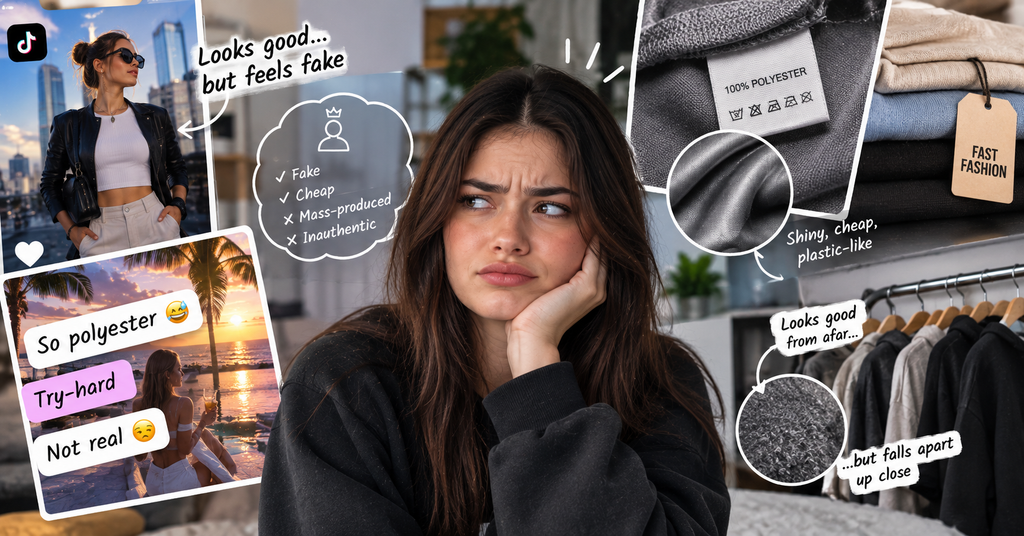
Polyester in slang means something is cheap, fake, mass-produced, or inauthentic, especially when it tries to look high-quality but feels hollow up close. The term went viral on TikTok in mid-2026 as Gen Z’s go-to insult for anything that feels manufactured, try-hard, or lacking real substance.
This article breaks down everything you need to know: the slang meaning, where it came from, how to use it, plus clear answers to related questions about polyester in clothing, heather blends, recycled polyester, and what polyester actually does to your body.
Table of Contents
The Slang Meaning: What Does “Polyester” Mean in 2026?
In 2026, calling something polyester is shorthand for saying it’s low-quality, artificial, generic, or painfully try-hard. It borrows from polyester fabric’s reputation as the cheap, shiny material used in fast fashion—something that looks decent from afar but feels plasticky and disposable when you actually touch it. It’s the latest addition to the ever-growing world of Gen Z slang, reshaping how young people talk about quality and authenticity.
Quick Definition
| Term | Slang Meaning |
| Polyester | Cheap, mass-produced, inauthentic, or fake-fancy; something that looks polished but feels hollow or low-effort |
| Polyester vibe | An overly curated, manufactured aesthetic that lacks authenticity |
| Polyester person | Someone who comes across as fake, try-hard, or performing a lifestyle rather than living it |
Where Did the Slang Come From?
The insult emerged from TikTok’s video-editing and fashion communities in early 2026, then spread across the platform by July and August. It started as a joke about flashy, over-edited videos that looked slick but felt cheap—like a polyester shirt that shines under lights but doesn’t breathe. From there, it became a catch-all verdict on anything that felt manufactured: staged “candid” moments, influencer endorsements of products they’ve never used, aspirational lifestyle content built from trending checklists, and more, much like other fast-moving TikTok trends that rise and fall within weeks.
How Gen Z Uses “Polyester” in Real Life
- On outfits: “That whole look is so polyester” means it feels fast-fashion, generic, or trying too hard to be trendy.
- On content: “This edit is polyester” means flashy effects, but hollow or low-effort underneath.
- On people or vibes: “Her whole brand feels polyester” is curated, inauthentic, or performative rather than genuine.
The insult works because it’s specific yet flexible: it captures the feeling of something that looks good from a distance but falls apart up close. It sits alongside other appearance-focused slang like looksmaxxing, where the goal is also about how something (or someone) holds up under close inspection.
Related Questions People Ask
1. What Does Polyester Mean in Heather?
“Heather” isn’t slang; it’s a textile term. Heather fabric gets its soft, speckled look by blending different colored fibers (often cotton and polyester) before spinning them into yarn. So when you see “heather polyester” on a clothing tag, it means the heathered fabric includes polyester fibers for durability, wrinkle resistance, and sharper color speckles.
In short:
- Heather = the mottled, flecked appearance created by mixing colored fibers
- Polyester in heather = a synthetic fiber added to the blend for strength and colorfastness
There’s no hidden slang meaning here this one’s strictly about fabric construction.
2. What Does Polyester Mean in Clothing?
In clothing, polyester is a synthetic fabric made from petroleum-based polymers (essentially plastic fibers). It’s the world’s most widely used fiber because it’s cheap, durable, wrinkle-resistant, and holds color well.
Common uses:
- Fast fashion basics (tees, dresses, jackets)
- Activewear and performance gear (moisture-wicking properties)
- Blends with cotton, rayon, or elastane for stretch and durability
100% polyester vs. cotton:
- Polyester = synthetic, less breathable, traps heat/moisture, dries quickly, resists wrinkles
- Cotton = natural fiber, breathable, absorbs moisture, wrinkles easily, softer against skin
Polyester isn’t inherently “bad”; high-quality versions perform well in sportswear and outdoor gear, but it’s often associated with cheap, mass-produced fast fashion, which is exactly why it became slang for anything fake or low-effort.
3. What Does Recycled Polyester Mean?
Recycled polyester (rPET) is polyester made from post-consumer plastic waste, usually discarded water bottles or old polyester textiles, instead of virgin petroleum. The plastic is collected, cleaned, melted down, and re-spun into new polyester fibers.
Why it matters:
- Reduces plastic waste by giving bottles and textiles a second life
- Lowers environmental impact: uses 30–59% less energy and cuts CO₂ emissions by up to 79% compared to virgin polyester
- Performs the same as regular polyester in terms of durability and function
Limitations:
- Still sheds microplastics when washed
- Doesn’t biodegrade (it’s still plastic)
- Most recycled polyester comes from bottles, not old clothes, so it doesn’t fully solve textile waste
Recycled polyester is a better choice than virgin polyester from an environmental standpoint, but it’s not a perfect solution.
4. What Does Polyester Do to Your Body?
For most people, polyester is safe to wear, but it can cause issues for those with sensitive skin or certain conditions. Here’s what the research shows:
Potential effects:
- Traps heat and moisture: Polyester doesn’t breathe like cotton, so sweat stays against your skin. This can lead to discomfort, heat rash, or worsen eczema and contact dermatitis.
- Skin irritation: Some people experience itching, redness, or rashes usually from chemical dyes and finishes (like formaldehyde resins) used in manufacturing, not the polyester fiber itself.
- Microplastic shedding: Every wash releases tiny plastic fibers into water systems. While these don’t penetrate healthy skin, they’re an environmental concern and may carry chemical residues.
Who should be cautious:
- People with eczema, sensitive skin, or textile allergies
- Anyone in hot, humid climates where sweat doesn’t evaporate easily
Tips to reduce irritation:
- Choose natural fiber blends (cotton, linen, Tencel) for everyday wear
- Wash new polyester clothes before wearing to remove residual chemicals
- Look for Oeko-Tex or GOTS-certified fabrics, which limit harmful dyes and finishes
5. Is 100% Polyester Good or Bad?
It depends on what you need it for.
| Use Case | Verdict |
| Activewear / outdoor gear | Good moisture-wicking, quick-drying, durable |
| Everyday basics in hot climates | Mixed can feel clammy, trap sweat, irritate sensitive skin |
| Fast fashion / trendy pieces | Cheap and disposable, often low-quality, sheds microplastics |
| Blends (poly-cotton, etc.) | Balanced; adds durability without sacrificing all breathability |
Bottom line: 100% polyester isn’t inherently toxic, but it’s not ideal for all-day, everyday wear, especially if you have sensitive skin or live somewhere hot and humid. Blends or natural fibers are usually more comfortable for daily use. Ironically, when a fast-fashion piece falls apart after two washes, Gen Z might just call it cooked.
6. Is Polyester 100% Plastic?
Yes, polyester is a type of plastic. Specifically, it’s made from polyethylene terephthalate (PET), the same polymer used in plastic water bottles. That’s why it doesn’t biodegrade, sheds microplastics, and gives cheap garments a slightly plasticky feel.
Why This Slang Matters: What “Polyester” Says About Gen Z Values
The rise of “polyester” as an insult reflects Gen Z’s broader cultural priorities: authenticity over aesthetics, substance over performance, and quality over quantity. In a world of curated Instagram feeds, AI-generated content, and influencer marketing, calling something “polyester” is a way of saying: “This looks good, but it’s hollow. I can tell it was made to impress, not to mean anything.”
It’s also a critique of fast fashion and disposable culture, both in clothing and in digital content. Just like a polyester shirt might look shiny in the store but pill and fade after two washes, “polyester” content or vibes look impressive at first glance but don’t hold up under scrutiny. It’s similar to chasing aura points online: the appearance of being cool doesn’t always match reality.
How to Use “Polyester” Correctly (Without Sounding Cringe)
Do:
- Use it sparingly as a one-word verdict: “That whole aesthetic is so polyester.”
- Apply it to things that genuinely feel manufactured or try-hard, not just anything you dislike
- Understand the nuance: it’s not just “cheap”; it’s fake-fancy or low-effort but pretending to be high-effort
Don’t:
- Overuse it to the point where it loses meaning
- Use it as a blanket insult for anything trendy; context matters
- Confuse it with older slang like “polyester princess” (1990s term for someone dressed out of style)
It also pairs well conceptually with other slang that calls out someone trying too hard to seem impressive, like mogging, which is more about outclassing someone in appearance than being fake.
Final Thought
“Polyester” is more than just a viral insult; it’s a cultural barometer for a generation that values realness in an increasingly manufactured world. Whether you’re seeing it in TikTok comments, hearing it in conversation, or spotting it on clothing tags, the word carries two layers of meaning: the literal (a synthetic fabric with real pros and cons) and the slang (a verdict on anything that feels hollow, fake, or trying too hard).
Understanding both meanings helps you navigate modern culture with clarity. You’ll know when someone’s calling out inauthentic content, when they’re just talking about fabric, and when the two overlap—like calling out fast fashion for being both literally and metaphorically “polyester.” For more breakdowns of terms like this, browse the full Brain Rot Words blog.
FAQs
Is “polyester” just a TikTok thing?
A: It started on TikTok but has spread to X (Twitter), Instagram comments, and everyday Gen Z conversation.
Can older generations use this slang?
A: You can, but it may come across as forced if you’re not already part of the cultural conversation, kind of like when someone gets called unc for trying too hard to sound current. Context and tone matter.
Will this slang stick around?
A: Hard to say; Gen Z slang moves fast. But “polyester” taps into a lasting cultural critique of authenticity, so the idea behind it may outlive the word itself.
Is polyester fabric actually bad?
A: Not inherently. It has legitimate uses (performance wear, durability), but cheap polyester in fast fashion is associated with poor quality and environmental harm.
What’s the difference between polyester and recycled polyester?
A: Regular polyester is made from virgin petroleum; recycled polyester (rPET) is made from post-consumer plastic like water bottles. Both perform the same, but rPET has a lower environmental footprint.
Can you be allergic to polyester?
A: True, polyester allergies are rare. Most reactions come from chemical dyes and finishes used in manufacturing, not the fiber itself.
Is 100% polyester like cotton?
A: No. Polyester is synthetic, less breathable, and traps moisture; cotton is natural, breathable, and absorbs sweat. They feel and perform very differently.
What does “heather polyester” mean on a clothing tag?
A: It means the fabric has a heathered (speckled) look created by blending colored fibers, and polyester is one of the fibers in that blend for durability and color retention.
How do I avoid “polyester” content online?
Look for creators who show behind-the-scenes, admit mistakes, and share unpolished moments. Authenticity usually shows through consistency and vulnerability, not perfection.
Is recycled polyester sustainable?
A: It’s more sustainable than virgin polyester (less energy, fewer emissions), but it still sheds microplastics and doesn’t biodegrade. It’s a better option, not a perfect one.