Unc Meaning: Quick Definition
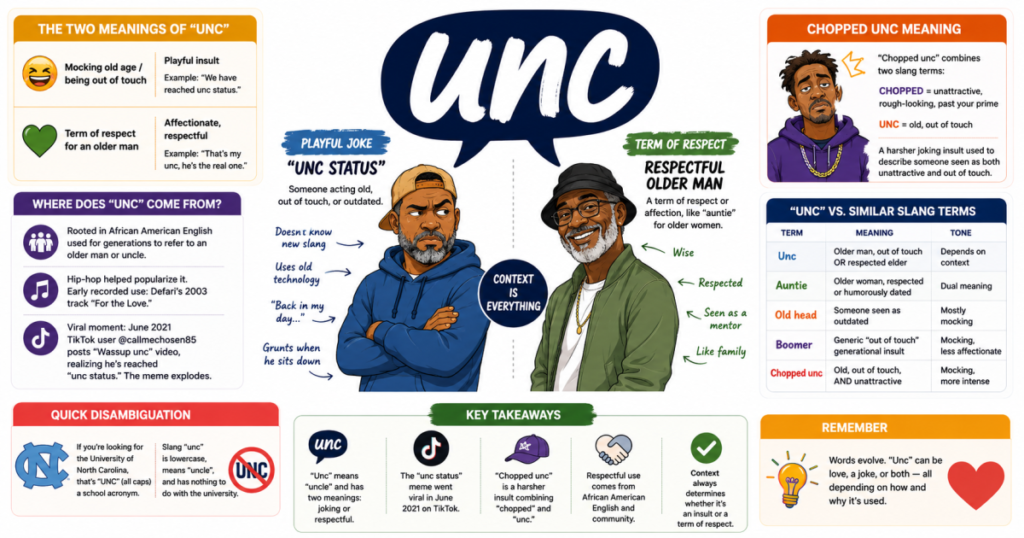
Unc is internet slang short for “uncle,” used to describe someone, usually a man who’s acting old, out of touch, or out of style, often in the joking phrase “unc status.” It also has a second, warmer meaning rooted in African American English, where it’s used as a term of respect or affection for an older man, similar to how “auntie” is used for older women.
If you’ve seen “unc” in a comment section and aren’t sure whether it’s an insult or a compliment, the honest answer is: it depends entirely on context. Here’s the full breakdown: origin, both meanings, the “chopped unc” spinoff, and a quick note on the one thing this word gets confused with online.
Table of Contents
Quick Disambiguation: “Unc” Slang vs. “UNC” the School
Before going further, if you searched “unc meaning” hoping to learn about the University of North Carolina, that’s a completely different “UNC,” an unrelated acronym for the school’s name. The slang term covered here is always lowercase “unc” and has nothing to do with the university; it’s simply a shortened form of “uncle.”
What Does “Unc” Mean?
Unc (noun): a slang shortening of “uncle,” used online to humorously call out someone, often a man, for acting or seeming older than they are, frequently paired with the phrase “unc status.”
Someone reaches “unc status” by doing things seen as dated or out of touch: grunting when they sit down, not knowing current slang, using old technology, or constantly bringing up “back in my day.” It’s usually lighthearted ribbing rather than a serious insult.
The Two Meanings of “Unc”
“Unc” carries two distinct meanings that often get mixed up, largely because both are used casually and can appear in the same sentence.
| Meaning | Tone | Typical Use |
| Mocking old age / being out of touch | Playful insult | “We have reached unc status” after doing something dated |
| Term of respect for an older man | Affectionate, respectful | Referring to a respected older figure, similar to “auntie” for women |
The second meaning comes directly from African American English, where “unc” has long been used to refer to one’s actual uncle or a respected older man in the community, sometimes affectionately, sometimes as gentle ribbing of an elder, but rooted in familiarity rather than mockery. Prominent older men in entertainment, like Snoop Dogg, are often called “unc” online in this respectful sense.
Where Does “Unc” Come From?
The current viral, joking sense of “unc” the one tied to “unc status” traces to a specific moment: in June 2021, TikTok user @callmechosen85 posted a video of a younger person greeting him with “Wassup unc,” captioned with the realization that he’d “OFFICIALLY reached ‘unc status.'” That video is widely credited with launching the modern meme version of the term, which then spread across TikTok and Twitter/X as a shorthand for feeling — or acting old.
Chopped Unc Meaning
“Chopped unc” combines two separate slang terms into one harsher phrase:
- Chopped = unattractive, rough-looking, or “past your prime” in current slang
- Unc = old, out of touch, or uncle-status
Put together, a “chopped unc” describes someone (usually a man) seen as both unattractive and out of touch, a step up in intensity from “unc” alone, which can be lighthearted or even respectful. “Chopped unc” is almost always used as a joking insult, not the warmer, respectful version of “unc.”
“Unc” vs. Similar Slang Terms
| Term | Meaning | Tone |
| Unc | Older man, out of touch OR respected elder | Depends on context |
| Auntie | Older woman, respected or humorously dated | Similar dual meaning, feminine equivalent |
| Old head | Someone seen as outdated, often in music/culture taste | Mostly mocking |
| Boomer | Generational insult, generic “out of touch” | Mocking, less affectionate than unc |
| Chopped unc | Old, out of touch, AND unattractive | Mocking, more intense |
The key difference: “boomer” is almost purely dismissive, while “unc” keeps its respectful, familial meaning alive alongside the joking one, which is exactly why context matters so much when you see it used.
Common Misconceptions
- “Unc is always an insult.” It isn’t in African American English specifically; it’s frequently used with genuine warmth and respect for an older man.
- “Unc and UNC (the university) are related.” They’re unrelated; one is slang for “uncle,” the other is an institution’s initialism.
- “Chopped unc and unc mean the same thing.” “Chopped unc” is a specific, harsher compound term about appearance and age together, not just a longer version of “unc.”
Key Takeaways
- “Unc” is slang for “uncle,” used both as a playful insult for acting old and as a genuine term of respect for an older man, especially in African American English.
- The viral “unc status” meme traces to a specific June 2021 TikTok video.
- “Chopped unc” combines “chopped” (unattractive) and “unc” (old/out of touch) into a harsher, joking insult.
- Don’t confuse slang “unc” with “UNC,” the University of North Carolina; they’re unrelated.
FAQs
1. What does “unc” mean in slang?
“Unc” is short for “uncle,” used online to describe someone acting old or out of touch, and also used as a genuine term of respect for an older man, particularly in African American English.
2. What does “unc” mean on TikTok?
On TikTok, “unc” usually refers to the “unc status” meme, joking that someone is acting or looking older than they are, a trend traced back to a viral June 2021 video.
3. What does “unc” mean in Gen Z slang specifically?
Gen Z primarily uses “unc” as a playful callout for outdated behavior or appearance, though the term’s respectful meaning from African American English still coexists alongside the joking use.
4. What does “chopped unc” mean?
“Chopped unc” combines “chopped” (unattractive or rough-looking) with “unc” (old or out of touch) to describe someone seen as both a harsher, more joking insult than “unc” alone.
5. Is calling someone “unc” always disrespectful?
No, while it’s often used as a light joke about age, “unc” also carries a genuinely respectful meaning for an older man in African American English, so the tone depends entirely on context.t