Quick Answer
Harmonicode Sport is an emerging term used to describe the combination of sports, technology, artificial intelligence (AI), wearable devices, and data-driven performance analysis. While there is no single industry-standard definition, many sources use the term to refer to systems that help athletes improve training, monitor performance, and make better decisions using real-time data.
What Is Harmonicode Sport?
If you’ve recently searched for harmonicode sport, you’ve probably noticed something unusual: different websites describe it in different ways.
Some explain it as an AI-powered sports technology platform, while others associate it with gaming, esports, or rhythm-based athletic systems. This variation can make the topic confusing, especially for readers looking for a clear definition.
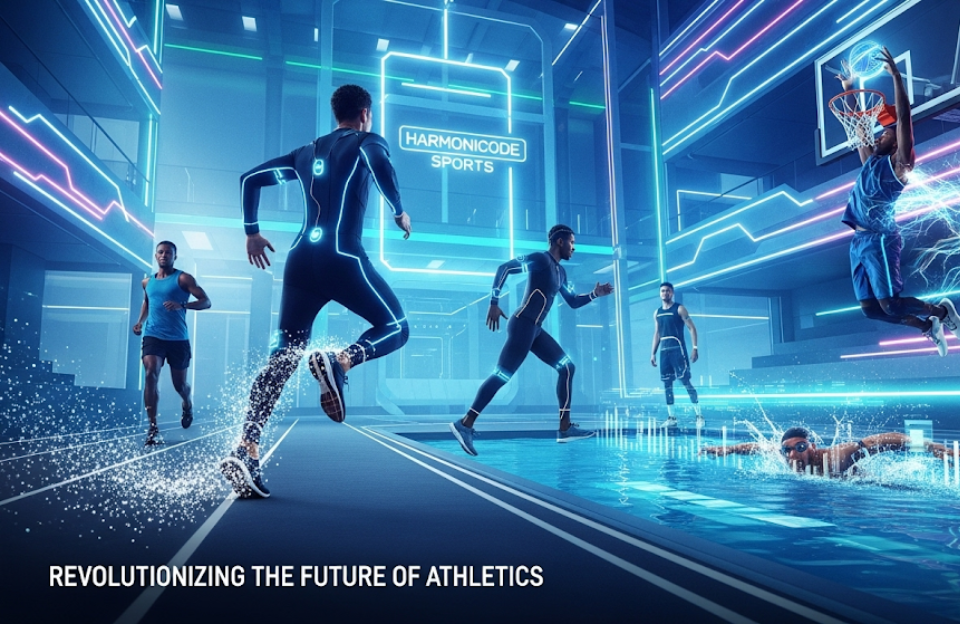
Based on the available information, Harmonicode Sport is best understood as an emerging concept rather than a formally recognized sports discipline. It broadly refers to the use of advanced technologies—such as artificial intelligence, wearable sensors, motion tracking, and data analytics—to enhance athletic performance, coaching, and player development.
Instead of replacing athletes or coaches, these technologies are designed to support better decision-making by providing insights that would be difficult to observe through traditional training alone.
Definition at a Glance
| Feature | Description |
| Meaning | A technology-driven approach to sports performance and athlete development |
| Core Technologies | Artificial intelligence, wearable devices, biomechanics, motion tracking, sports analytics |
| Main Goal | Improve performance, training efficiency, injury prevention, and decision-making |
| Users | Athletes, coaches, trainers, sports organizations, esports competitors |
| Industry Status | Emerging concept with no universally accepted definition |
Why Is Harmonicode Sport Becoming Popular?
The sports industry has changed dramatically over the last decade.
Modern athletes no longer rely solely on experience or instinct. Professional teams, colleges, fitness organizations, and even amateur athletes increasingly use data to understand performance.
Today, wearable devices can measure:
- Heart rate
- Speed
- Acceleration
- Distance covered
- Recovery time
- Sleep quality
- Training load
Artificial intelligence can then analyze this information to identify patterns, recommend personalized training adjustments, and help coaches make more informed decisions.
The growing interest in harmonicode sport reflects this broader movement toward technology-assisted athletics.
Why Do Different Websites Define Harmonicode Sport Differently?
One of the biggest challenges when researching this topic is that there isn’t an official governing body or universally accepted definition of Harmonicode Sport.
Different publishers use the term to describe different ideas, including:
- AI-assisted athletic training
- Data-driven sports performance analysis
- Smart wearable technology
- Esports and competitive gaming
- Adaptive sports systems
- Digital coaching platforms
Rather than treating one interpretation as the only correct answer, it’s more accurate to view harmonicode sport as an umbrella term for technology-enhanced sports and performance systems.
This distinction is important because it helps readers separate verified information from marketing claims or speculative descriptions.
The Technology Behind Harmonicode Sport
Although definitions vary, most explanations share several common technologies.
- Artificial Intelligence
Artificial intelligence analyzes large amounts of performance data much faster than humans.
For example, AI can help identify:
- inefficient movement patterns,
- training trends,
- fatigue levels,
- recovery needs,
- performance improvements over time.
Instead of replacing coaches, AI provides additional insights that support coaching decisions.
- Wearable Technology
Modern wearable devices collect valuable information during training and competition.
Common examples include:
- GPS trackers
- Smartwatches
- Heart rate monitors
- Motion sensors
- Fitness bands
These devices generate real-time performance data that coaches and athletes can review after training sessions.
- Motion Tracking and Biomechanics
Motion tracking systems study how athletes move.
Using cameras, sensors, or computer vision, these systems can evaluate:
- running mechanics,
- jumping technique,
- throwing motion,
- posture,
- balance,
- movement efficiency.
Small improvements in technique can lead to better performance while reducing unnecessary physical strain.
- Sports Analytics
Sports analytics transforms raw numbers into useful information.
Instead of simply recording statistics, analytics helps answer questions such as:
- Which training methods produce the best results?
- When is an athlete becoming fatigued?
- Which tactical decisions improve team performance?
- How should training plans be adjusted?
This data-driven approach has become increasingly common in professional sports around the world.
Is Harmonicode Sport a Real Sport?
This is one of the most common questions people ask.
The answer is not exactly.
Unlike football, basketball, tennis, or athletics, Harmonicode Sport is not officially recognized as a separate sport.
Instead, the term is generally used to describe technology-driven approaches that enhance existing sports through data, artificial intelligence, wearable devices, and performance analysis.
Think of it as a modern framework for improving athletic performance rather than a completely new athletic competition.
How Does Harmonicode Sport Work?
Although different platforms use different methods, the general process follows a similar pattern.
- Athletes perform training sessions or compete in games.
- Wearable devices and sensors collect movement and physiological data.
- Software analyzes the information using AI and machine learning.
- Coaches receive reports highlighting strengths, weaknesses, and improvement opportunities.
- Training plans are adjusted based on objective performance data.
This continuous feedback loop allows athletes to make informed improvements instead of relying solely on observation.
Benefits of Harmonicode Sport
Technology-assisted training offers several potential advantages.
- More Personalized Training
Every athlete develops differently.
Data analysis allows coaches to create individualized training plans based on an athlete’s fitness level, recovery rate, workload, and performance history instead of using a one-size-fits-all approach.
- Better Performance Insights
Rather than guessing why performance changes, athletes can identify measurable trends over time.
This helps them focus on the areas that will have the greatest impact.
- Smarter Coaching Decisions
Objective data complements coaching experience by providing additional evidence that can guide tactical and training decisions.
- Improved Athlete Monitoring
Continuous monitoring can help identify signs of excessive training load or declining performance, allowing coaches to adjust programs before problems become more serious.
Are There Any Limitations?
While the technology is promising, it’s important to recognize its limitations.
Technology should support—not replace—human expertise.
Potential challenges include:
- High implementation costs
- Privacy concerns surrounding athlete data
- Dependence on accurate sensor measurements
- Learning curves for coaches and athletes
- Risk of overreliance on algorithms
Successful sports programs combine technology with professional coaching, sports science, and athlete experience rather than relying on software alone.
Gaming Harmonicode: How Technology Is Expanding Beyond Traditional Sports
One of the secondary keywords associated with this topic is gaming harmonicode. Unlike traditional sports, this phrase is generally used in discussions about competitive gaming, esports, and AI-assisted performance improvement.
Although there is no universally accepted definition, gaming Harmonicode typically refers to the application of advanced analytics, performance tracking, and intelligent coaching tools within competitive gaming environments.
The idea is similar to how professional athletes use wearable technology and video analysis. Instead of measuring physical performance alone, gaming platforms analyze factors such as:
- Reaction time
- Accuracy
- Decision-making speed
- Mouse and controller movements
- Strategic choices
- Team communication
- Match performance trends
As esports continues to grow worldwide, data-driven coaching is becoming increasingly valuable for both amateur and professional players.
What Are Harmonicode Games?
Another commonly searched variation is harmonicode games.
Rather than referring to a specific video game, this phrase is often used to describe games or gaming systems that integrate technology to improve player performance, learning, or competitive balance.
Depending on the context, Harmonicode games may include features such as:
- AI-generated coaching suggestions
- Performance analytics dashboards
- Adaptive difficulty levels
- Personalized training programs
- Team strategy analysis
- Match replay breakdowns
For example, a competitive first-person shooter could analyze a player’s aiming accuracy over multiple matches and recommend targeted exercises to improve consistency. Similarly, a strategy game might identify recurring tactical mistakes and suggest alternative approaches.
These concepts are still evolving, but they illustrate how data and AI are becoming part of modern gaming experiences.
Team Harmonicode: What Does It Mean?
People also search for Team Harmonicode, but the meaning depends on the source.
In some cases, the phrase refers to a community or organization focused on technology-driven gaming or esports. In others, it is associated with websites that publish articles about AI, gaming, and sports innovation.
Because there is no single official organization universally recognized under this name, it’s important not to assume that every reference points to the same group.
When researching Team Harmonicode, always verify:
- Whether you’re looking at a company, gaming community, or editorial website.
- The organization’s official website and social media.
- Whether the information is current and supported by reliable sources.
This approach helps avoid confusion, especially since the term is relatively new and used in different contexts.
How Harmonicode Sport Could Be Used in the Real World
Many articles discuss futuristic ideas but rarely explain how similar technologies are already being used today. While “Harmonicode Sport” itself is an emerging concept, the technologies associated with it are already part of modern athletics.
Here are a few practical examples.
Professional Team Sports
Elite football, basketball, baseball, and rugby teams often use GPS trackers and wearable sensors during training sessions.
These tools measure:
- Total distance covered
- Sprint frequency
- Maximum speed
- Acceleration and deceleration
- Heart rate
- Recovery patterns
Coaches use this information to adjust training intensity and reduce the risk of overtraining.
Running and Endurance Sports
Distance runners frequently rely on smartwatches and fitness trackers to monitor:
- Pace
- Cadence
- Heart rate
- Recovery
- Sleep quality
- VO₂ max estimates
By reviewing this data over time, athletes can identify trends and make informed adjustments to their training plans.
Strength and Conditioning
Modern strength coaches increasingly use velocity-based training systems to measure how quickly athletes move a barbell during exercises like squats and bench presses.
This data helps determine whether an athlete is training for strength, power, or endurance and allows workouts to be adjusted based on daily performance rather than fixed percentages.
Esports
Competitive gaming teams now review match recordings, communication patterns, reaction times, and decision-making data to improve individual and team performance.
While esports differs from traditional athletics, the underlying principle is the same: collect meaningful data, analyze it, and use those insights to perform better.
Technologies That Reflect the Harmonicode Approach
Although there is no single “Harmonicode” platform used across the sports industry, several established technologies demonstrate the same principles.
| Technology | Primary Purpose |
| Wearable fitness trackers | Monitor movement, heart rate, and recovery |
| GPS athlete tracking systems | Measure speed, distance, and workload |
| Motion capture cameras | Analyze movement mechanics |
| AI video analysis | Identify technical and tactical improvements |
| Computer vision systems | Evaluate player positioning and movement |
| Sports analytics software | Transform performance data into actionable insights |
These technologies are already helping athletes and coaches make better-informed decisions without replacing human expertise.
Harmonicode Sport vs. Traditional Coaching
Technology has changed coaching, but it hasn’t replaced it.
The biggest difference lies in how decisions are made.
| Traditional Coaching | Harmonicode-Inspired Approach |
| Observation-based | Data-supported |
| Experience-driven | Experience plus analytics |
| Manual record keeping | Automated performance tracking |
| Periodic evaluations | Continuous monitoring |
| General training plans | Personalized recommendations |
| Video review | AI-assisted video analysis |
Rather than competing with coaches, technology gives them additional information that may otherwise go unnoticed.
Common Misconceptions About Harmonicode Sport
Because the term is relatively new, several misconceptions have emerged.
Misconception 1: Harmonicode Sport Is an Official Sport
Not currently. It is better described as an emerging concept that combines technology with athletic performance rather than a recognized competitive sport.
Misconception 2: AI Can Replace Coaches
Artificial intelligence can process large amounts of data, but it cannot replace the experience, communication skills, motivation, and judgment that human coaches provide.
The most effective programs combine both.
Misconception 3: Only Professional Athletes Benefit
Many consumer fitness devices now provide insights that were once available only to elite athletes. Recreational runners, cyclists, gym enthusiasts, and amateur competitors can also use data to monitor progress and train more effectively.
Misconception 4: More Data Always Means Better Performance
Collecting data is only useful if it leads to meaningful decisions.
Too much information without proper interpretation can overwhelm athletes and coaches rather than help them.
The Advantages and Challenges of Harmonicode Sport
Like any technological innovation, Harmonicode-inspired systems offer both opportunities and limitations.
Advantages
- More personalized training programs
- Better understanding of athlete performance
- Earlier identification of fatigue trends
- Improved tactical decision-making
- Enhanced player development
- Objective performance measurements
- Better long-term progress tracking
Challenges
- High equipment and software costs
- Privacy concerns related to athlete data
- Differences in data quality between devices
- Need for technical expertise
- Potential overreliance on analytics
- Limited access for smaller organizations
Understanding both sides helps athletes and coaches make realistic decisions about adopting new technologies.
The Future of Harmonicode Sport
Technology is already transforming the way athletes train, recover, and compete. As artificial intelligence, wearable devices, and sports analytics continue to evolve, concepts like Harmonicode Sport are likely to become more sophisticated and accessible.
Several trends are shaping the future of technology-assisted athletics.
Smarter Artificial Intelligence
Future AI systems will do more than analyze past performance. They are expected to provide predictive insights, helping coaches anticipate fatigue, optimize training schedules, and identify potential performance declines before they become noticeable.
Instead of reacting to problems, teams may increasingly prevent them through continuous monitoring.
More Advanced Wearable Technology
Wearable devices are becoming smaller, lighter, and more accurate.
Future sensors may measure:
- Muscle fatigue
- Hydration levels
- Recovery quality
- Movement efficiency
- Joint stress
These improvements could provide athletes with a more complete understanding of their physical condition during training and competition.
Computer Vision and Video Analysis
Modern computer vision systems can already analyze player positioning and movement without requiring wearable devices.
As this technology improves, athletes may receive instant feedback after every drill or match, allowing coaches to make immediate adjustments.
Personalized Training for Every Athlete
No two athletes respond to training in exactly the same way.
Future performance platforms will likely create increasingly personalized recommendations based on an individual’s goals, fitness level, injury history, recovery patterns, and previous training sessions.
This individualized approach has the potential to improve both performance and long-term athlete development.
Challenges That Still Need to Be Solved
Although technology offers exciting opportunities, several challenges remain.
Data Privacy
Athlete performance data is valuable.
Organizations must ensure that personal health information and performance metrics are collected, stored, and shared responsibly while complying with privacy regulations.
Accessibility
Professional sports organizations often have access to advanced technology that smaller clubs, schools, and community programs cannot afford.
As technology becomes more affordable, wider access will be essential for reducing this gap.
Human Judgment Still Matters
Artificial intelligence can recognize patterns, but it cannot replace the experience, leadership, and communication skills of coaches.
Successful athlete development depends on combining objective data with human expertise rather than relying entirely on algorithms.
Key Takeaways
- Harmonicode Sport is an emerging term that generally describes the use of AI, wearable technology, motion tracking, and analytics to improve athletic performance.
- There is no single universally accepted definition, so different sources may use the term in different ways.
- Technologies commonly associated with Harmonicode Sport are already used in professional sports, fitness, and esports.
- AI supports coaches by providing data-driven insights rather than replacing human decision-making.
- The future of technology-assisted athletics will likely focus on greater personalization, predictive analytics, and improved athlete monitoring while balancing privacy, accessibility, and ethical considerations.
Frequently Asked Questions
What is Harmonicode Sport?
Harmonicode Sport is an emerging concept that combines sports, artificial intelligence, wearable technology, and performance analytics to help athletes and coaches make data-informed training decisions. Because the term is relatively new, its exact meaning varies across different websites and platforms.
Is Harmonicode Sport an official sport?
No. Harmonicode Sport is not recognized as an official competitive sport. Instead, it describes technology-driven methods used to enhance performance in existing sports and esports.
How does AI improve athletic performance?
AI analyzes performance data collected from sensors, wearable devices, and video recordings. It can identify movement patterns, monitor workload, track progress over time, and provide recommendations that help coaches and athletes make informed training decisions.
What is Gaming Harmonicode?
Gaming Harmonicode generally refers to the use of AI, analytics, and performance tracking within competitive gaming and esports. These tools can evaluate reaction time, decision-making, and gameplay patterns to support player development.
Is Harmonicode Sport only for professional athletes?
No. While elite sports organizations often use advanced technology, many of the same principles are now available to recreational athletes through smartwatches, fitness trackers, and mobile training applications.
Final Thoughts
The growing interest in Harmonicode Sport reflects a broader shift toward data-driven athletics. While the term itself does not yet have a universally accepted definition, the technologies commonly associated with it—artificial intelligence, wearable devices, biomechanics, and sports analytics—are already reshaping how athletes train and compete.
Rather than viewing technology as a replacement for traditional coaching, it is more accurate to see it as a powerful tool that complements human expertise. Coaches still provide strategy, motivation, and experience, while technology offers measurable insights that support better decisions.
As these innovations continue to evolve, athletes at every level—from beginners to professionals—will have greater access to personalized training, real-time feedback, and evidence-based performance analysis. The future of sports is unlikely to be defined by technology alone, but by the effective partnership between human judgment and intelligent data.