
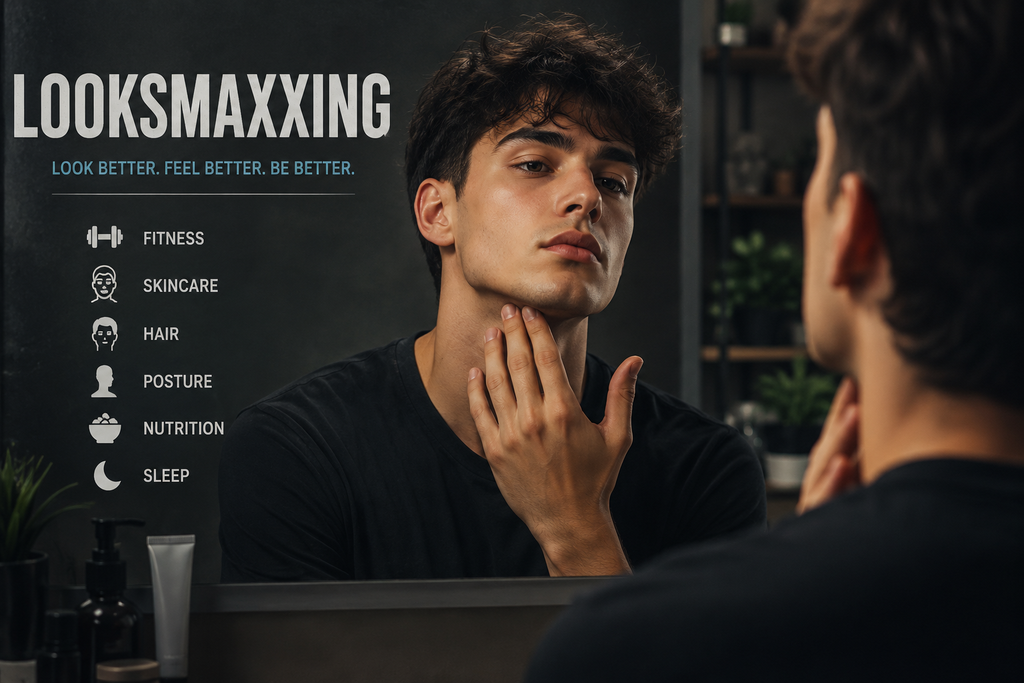
Looksmaxxing means trying to improve your physical appearance as much as possible. Online, the term can describe anything from getting a better haircut and using sunscreen to extreme dieting, unregulated substances, or cosmetic surgery.
The healthiest way to approach looksmaxxing is simple: focus on habits that support your health, confidence, and personal style not on rating your face, chasing a “perfect” jawline, or treating your appearance as your value.
Table of Contents
What is looksmaxxing?
Looksmaxxing is internet slang for “maximizing” your looks. It became popular in online male self-improvement communities often overlapping with sigma culture and later spread widely through TikTok, Reddit, YouTube, and short-form “glow-up” content, overlapping with slang like aura farming.
What does looksmaxxing mean in practice? Usually, it means making intentional changes to appearance, such as improving grooming, fitness, skin care, clothing, hair, posture, or dental care. But the term also has a more troubling side: some communities promote narrow beauty ideals, numerical appearance ratings, and risky attempts to change features that do not need “fixing.”
Looksmaxxing is not a medical method or a scientifically validated system for measuring attractiveness. It is an online trend with a mix of ordinary self-care, subjective beauty standards, and—in some spaces misinformation.
Softmaxxing vs. Hardmaxxing
The biggest distinction in looksmaxxing culture is between softmaxxing and hardmaxxing.
| Type | What it means | Examples | Main concern |
| Softmaxxing | Non-invasive, usually reversible appearance improvements | Haircut, skin care, hygiene, exercise, clothes that fit, sleep, posture | Can become obsessive if driven by constant comparison |
| Hardmaxxing | Invasive, permanent, medical, or high-risk attempts to alter appearance | Cosmetic surgery, injectables, steroids, extreme dieting, unregulated supplements | Physical, financial, and mental-health risks |
Softmaxxing often overlaps with normal self-care. Washing your face, treating acne with a clinician, strength training, sleeping enough, wearing clothes you like, and looking after your teeth are not inherently part of a harmful trend.
Hardmaxxing deserves much more caution. Surgery, prescription medication, orthodontic treatment, and injectable procedures should never be treated like viral “hacks.” They require qualified professionals, realistic expectations, informed consent, and careful attention to mental health.
What is the looksmaxxing method?
There is no single looksmaxxing method. Most online “protocols” combine some version of the following:
- Skin care and hair care
- Fitness, dieting, and body-composition goals
- Clothing, grooming, fragrance, and posture
- Facial-feature analysis, often focused on the jaw, eyes, cheeks, and nose
- Social-media progress photos and before-and-after comparisons
- In more extreme spaces, cosmetic procedures like a BBL, substances, or DIY facial techniques
The problem is that these methods do not all have the same level of evidence or risk. A consistent grooming routine is very different from crash dieting, taking unprescribed hormones, or trying to reshape your face at home.
What is the looksmaxxing scale?
A looksmaxxing scaleo ften called the PSL scale or a looksmaxxing chart is an online rating system used to rank facial attractiveness. It may label people with terms such as “normie,” “Chad,” “subhuman,” or other demeaning categories, and it’s closely tied to slang like “mogging”.
These charts can look scientific because they use numbers, facial ratios, and detailed language about jawlines, eye angles, symmetry, or bone structure. But they are not clinical tools. They cannot predict your happiness, relationships, intelligence, character, future, or worth as a person.
A 2025 qualitative study of a large looksmaxxing forum found that appearance ratings and “objective” standards were often used to humiliate users, pressure them toward medical interventions, and reinforce narrow ideals of masculinity.
How to read a looksmaxxing chart safely
If you encounter a looksmaxxing chart, treat it as internet culture not a verdict.
- Beauty standards vary across people, places, cultures, and time.
- Photos distort facial proportions through lighting, lenses, angles, filters, and editing.
- A rating cannot tell you whether someone will find you attractive or want a meaningful relationship with you.
- Repeatedly checking, rating, or comparing your face can damage self-esteem.
- Any chart that calls people “subhuman” is not offering constructive feedback.
Does looksmaxxing work?
Some parts can help; the extreme promises do not hold up.
Basic self-care can improve how you feel and present yourself. Better-fitting clothes, a haircut that suits you, consistent sleep, physical activity, dental hygiene, and treatment for skin concerns can make a real, visible difference over time.
But looksmaxxing does not guarantee popularity, dating success, or confidence. It also cannot reliably turn everyone into a narrow social-media ideal. Attractiveness is subjective, and relationships depend on far more than facial measurements.
A useful rule is this: if a method is healthy, affordable, reversible, and makes you feel more like yourself, it may be worth considering. If it requires pain, secrecy, self-hatred, dangerous restriction, unprescribed drugs, or irreversible changes to “earn” basic confidence, step back.
What looksmaxxing actually works?
The most reliable improvements are usually the least dramatic. Think of them as appearance-supporting health habits rather than a battle against your face.
1. Build a simple skin-care routine
A basic routine is often enough:
- Gentle cleanser suited to your skin
- Moisturizer
- Broad-spectrum sunscreen during the day
- A dermatologist or qualified clinician for persistent acne, irritation, hair loss, or other concerns
Do not add five new products at once. Give a routine time, patch-test when appropriate, and stop using products that burn, sting, or cause ongoing irritation.
2. Choose grooming that fits you
A clean haircut, trimmed facial hair, neat nails, and regular hygiene can create a bigger change than many expensive “glow-up” products.
Instead of copying an influencer’s look, consider your hair texture, face shape, lifestyle, and the amount of maintenance you realistically want style should read as confident, not zesty overkill.
3. Train for health and strength
Regular exercise can improve energy, mood, posture, strength, and overall well-being. It can also change body composition over time, but it should not become punishment for having a body you dislike.
Choose a routine you can maintain: walking, sports, resistance training, cycling, swimming, or classes you enjoy. Avoid extreme calorie cuts and workout plans that leave you exhausted, injured, or isolated.
4. Wear clothes that fit well
Fit usually matters more than labels. Start with clean, comfortable clothes that suit your proportions and make sense for your day-to-day life.
You do not need a complete wardrobe overhaul. One well-fitting pair of trousers, versatile shoes, and a few tops in colors you enjoy can go a long way.
5. Improve sleep and daily habits
Sleep affects energy, mood, focus, and how rested your skin and eyes look. Eating consistently, drinking enough water, managing stress, and avoiding smoking or excessive alcohol support your appearance because they support your health.
6. Get professional help for real concerns
If you have acne, a dental issue, sudden hair loss, jaw pain, or a medical concern, see the appropriate professional. Evidence-based care is more useful than a viral “fix.”
Which looksmaxxing trends should you avoid?
Some online trends are risky, unsupported, or both.
| Trend | Why to be cautious |
| Mewing to reshape an adult jawline | The American Association of Orthodontists says there is no scientific evidence supporting claims that it reshapes the jawline. |
| Bone smashing | Intentionally hitting facial bones can cause injury; it is not a safe way to sculpt a face |
| Jaw trainers or excessive gum chewing | Can contribute to jaw pain, tooth problems, or temporomandibular joint issues |
| DIY orthodontics or nose reshaping | Can damage teeth, gums, bite alignment, skin, and breathing |
| Crash dieting | Can harm physical and mental health and may contribute to disordered eating |
| Unprescribed steroids, hormones, peptides, or “testosterone boosters” | Can carry serious health risks and should not be used for appearance goals without medical oversight |
| Skin bleaching or harsh skin treatments | Can cause burns, irritation, allergic reactions, and lasting skin damage |
The goal is not to fear every cosmetic choice. The goal is to make decisions from a place of informed care, rather than panic, pressure, or online ranking culture.
Is looksmaxxing dangerous?
Looksmaxxing can be harmless when it simply means routine grooming and healthy self-care. It becomes dangerous when it teaches you that your face or body is a problem to solve.
Health organizations and researchers have raised concerns about obsessive comparison, distorted body image, extreme dieting, unsafe DIY treatments, and pressure on boys and young men to pursue risky changes, often amplified by social-media and algorithm-driven comparison. The danger is not only physical. An appearance-first mindset can also make people withdraw from friends, avoid photos or social events, and feel that they must become “better looking” before they deserve connection.
Signs looksmaxxing is hurting you
Consider taking a break from looksmaxxing content and talking with someone you trust if you notice that you:
- Spend hours checking mirrors, selfies, measurements, or ratings
- Avoid school, work, dating, friends, or events because of appearance worries
- Feel compelled to restrict food, overexercise, or use substances to change your body
- Constantly compare yourself with influencers, models, or strangers
- Believe one facial feature is ruining your life
- Feel hopeless, ashamed, anxious, or depressed because of how you look
- Think about hurting yourself
If you are in immediate danger or thinking about self-harm, contact your local emergency number or crisis service now, or tell a trusted person who can stay with you. You deserve support that is bigger than an algorithm’s beauty standard.
Is looksmaxxing a sin?
There is no single answer because beliefs about appearance, self-care, vanity, and cosmetic procedures vary across religions and denominations.
Many faith traditions encourage cleanliness, health, gratitude, modesty, and caring for the body. At the same time, they may caution against vanity, obsession, envy, cruelty toward others, or placing appearance above character and relationships.
A practical way to think about it is to ask: “Is this habit helping me care for myself, or is it feeding fear, comparison, and self-contempt?” If this question matters to you spiritually, discuss it with a trusted religious leader who understands your tradition.
A healthier alternative to looksmaxxing
You do not need a chart, a rating, or a perfect face to work on your confidence. Try this more sustainable approach:
- Pick one health habit, such as a regular bedtime or three weekly walks.
- Pick one grooming habit, such as a haircut, basic skin care, or better dental hygiene.
- Pick one style improvement, such as tailoring one outfit or finding colors you like.
- Unfollow accounts that make you feel defective or obsessed.
- Put equal effort into skills, friendships, kindness, interests, and goals that have nothing to do with your appearance.
The best version of self-improvement should expand your life—not shrink it to a score.
Frequently asked questions
What does looksmaxxing mean?
Looksmaxxing means trying to maximize physical attractiveness through grooming, fitness, style, skin care, and sometimes more extreme cosmetic or medical changes.
Is looksmaxxing only for men?
No. The term is strongly associated with male-focused online communities, but appearance pressure affects people of all genders, and looksmaxxing content now reaches a broader audience through Gen Z and Gen Alpha slang and wider meme culture.
Is a looksmaxxing chart accurate?
No. Looksmaxxing charts are subjective online rating systems, not scientific or medical assessments. They should not be used to judge yourself or other people.
Can mewing change your jawline?
There is no strong scientific evidence that mewing reshapes an adult jawline. Do not use forceful tongue posture or jaw exercises as a substitute for professional dental or orthodontic advice.
What is the safest way to improve your appearance?
Focus on sleep, nutrition, movement, hygiene, sunscreen, grooming, clothes that fit, and professional care for genuine medical or cosmetic concerns. Avoid unregulated products, extreme diets, DIY procedures, and any practice that makes you feel worse about yourself.
Final thoughts
Looksmaxxing isn’t inherently good or bad it’s a label that covers everything from a basic skincare routine to risky, unproven procedures. The useful version looks a lot like ordinary self-care: sleep, grooming, movement, clothes that fit, and professional help when something’s actually wrong. The harmful version is the one built around charts, ratings, and the idea that your face needs “fixing” before you’re allowed to feel good about yourself.
If you take one thing from this guide, let it be this: invest in habits that make you feel more like yourself, not less. Skip anything that asks you to trade your health, your money, or your self-respect for a score on an internet chart.