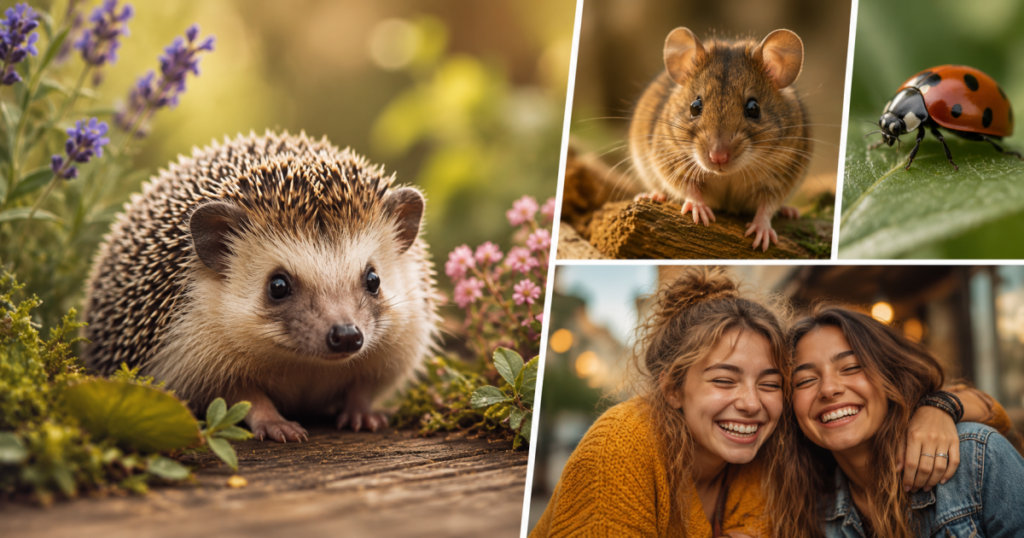
Beastie definition: Beastie means a small animal, especially one viewed with affection, such as a pet or a small wild creature like a mouse or insect. It comes from Scottish English, formed by adding the diminutive suffix “-ie” to “beast.” In modern slang, “beastie” is also used playfully to mean a close friend or to describe someone impressively skilled at something.
Key Takeaways
- Beastie traditionally means a small animal, especially one regarded with affection or gentle humor, like a mouse, insect, or pet.
- The word originated in Scottish English in the late 1700s, built from “beast” plus the diminutive suffix “-ie,” the same ending found in words like “lassie” and “birdie.”
- Poet Robert Burns helped cement the word in literary English with his 1785 poem “To a Mouse,” which opens by addressing a “wee, sleekit, cow’rin, tim’rous beastie.”
- In modern slang, “beastie” has two newer, more casual meanings: an affectionate term for a close friend (a playful twist on “bestie”), and a compliment meaning someone is impressively skilled or “an absolute beast” at something.
- “Beastie” is also used facetiously for insects or bugs, and in some regional and pop-culture contexts, it’s a nickname for legendary or menacing creatures, including Scotland’s Loch Ness Monster.
- Despite their similar sound, “beastie” and “bestie” (short for “best friend”) have separate origins and distinct core meanings, even though modern slang has begun to blend them.
What Does “Beastie” Mean?
Beastie is a noun meaning a small animal, especially one that inspires affection, amusement, or gentle unease rather than fear. Major dictionaries define it as a small creature, often used with a warm or humorous tone, the kind of word you’d use for a mouse darting across the kitchen floor or a beloved family pet, rather than a formal, clinical description of an animal.
The word carries real emotional texture that a plainer word like “animal” or “creature” doesn’t. Calling something a “beastie” almost always signals that the speaker finds it small, endearing, mildly startling, or some warm combination of the three.
Where Does “Beastie” Come From?
Beastie originated in Scottish English sometime between 1775 and 1785, formed by adding the diminutive suffix “-ie” to the word “beast.” This same suffix pattern shows up throughout Scottish and Northern English vocabulary, in words like “lassie” (little girl), “birdie” (little bird), and “doggie” (little dog). In each case, “-ie” softens the base word, adding a sense of smallness, familiarity, or fondness.
According to the Dictionaries of the Scots Language, an authoritative reference on historical Scottish vocabulary, “beastie” was used both as a general affectionate term for animals and, in some fishing communities, as specific slang: fishermen sometimes avoided saying the word “salmon” directly, out of superstition, and used “beastie” as a substitute instead.
The Robert Burns Connection
No discussion of “beastie” is complete without mentioning Scottish poet Robert Burns, whose 1785 poem “To a Mouse” is almost certainly the single most famous literary use of the word. The poem opens with the line: “Wee, sleekit, cow’rin, tim’rous beastie,” addressed to a field mouse whose nest the poet had accidentally destroyed while plowing.
That one line did more to plant “beastie” in wider English usage than perhaps any other single source. Even readers with no connection to Scotland or Scots dialect often recognize the word specifically because of Burns, even if they couldn’t place the exact poem it comes from.
How Is “Beastie” Used Today?
1. As an Affectionate Term for a Small Animal
This remains the word’s core, most widely recognized meaning: a small creature, wild or domestic, described with warmth.
Examples:
- “There’s a wee beastie living under the porch.”
- “The kids named every beastie they found in the garden.”
- “Careful, that beastie bites.”
2. Facetiously, for Insects or Bugs
Dictionaries note a secondary, somewhat joking use of “beastie” to describe bugs or insects, often ones that are mildly annoying rather than genuinely threatening.
Example: “A beastie flew into my soup at the picnic.”
3. As a Nickname for Legendary or Mysterious Creatures
“Beastie” is occasionally applied to famous mythical or cryptid creatures, most notably as an informal nickname for Scotland’s Loch Ness Monster, often shortened affectionately to “the beastie” alongside its more famous nickname, “Nessie.”
4. Regional Slang: Canadian Construction Worker
In a specific regional sense documented in Canadian slang, particularly in Alberta, “beastie” has been used informally to refer to a construction worker. This usage is narrow and mostly limited to that regional context rather than widespread across North America.
What Does “Beastie” Mean in Slang?
Beyond its traditional dictionary definition, “beastie” has picked up two distinct modern slang meanings, both largely disconnected from the original “small animal” sense.
Beastie as “Close Friend”
In casual, largely social-media-driven slang, “beastie” is sometimes used as a playful variant of “bestie,” meaning a close friend. This usage likely grew from the near-identical sound of the two words, and it’s often used with the same warmth and enthusiasm as “bestie,” “bff,” or “ride or die.”
Example: “You’re always there for me, you’re my beastie.”
Beastie as “Impressively Skilled” or “A Beast”
Separately, some slang usage treats “beastie” as a compliment, describing someone who’s excellent at a particular skill or activity, functioning as a softer, more playful version of calling someone “a beast.” This usage appears in casual conversation and informal online communities, often applied to sports, gaming, or other competitive contexts.
Example: “Did you see her run that marathon? She’s an absolute beastie.”
A Note on Slang Reliability
These two modern slang meanings are documented mainly through crowdsourced slang references, which reflect real usage but tend to vary more in consistency than a formal dictionary entry. If you hear “beastie” used to mean “friend” or “impressively skilled,” context should make the intended meaning clear, since both are noticeably different from the traditional “small animal” definition.
Beastie vs. Bestie: Are They the Same Word?
No, though modern slang has started to blur the line between them. Here’s how they actually differ.
| Word | Origin | Core Meaning | Typical Use |
| Beastie | Scottish English, from “beast” + “-ie” | A small animal, especially one felt with affection | Literary, regional, and traditional use; also newer slang for “friend” or “impressive” |
| Bestie | Modern English, shortened from “best friend” | A very close friend | Casual, primarily social media and spoken slang |
Despite sharing no etymological connection, the two words are close enough in sound that some speakers now use “beastie” playfully as a stand-in for “bestie,” which is why you’ll increasingly see both spellings used for the “close friend” meaning online.
Beastie Boys: Where Does the Band Name Fit In?
The hip-hop group Beastie Boys, formed in the early 1980s, is one of the most widely recognized uses of “beastie” in modern pop culture, though the band’s name isn’t a direct reference to the traditional Scottish word. It’s more commonly understood as wordplay connected to slang and street culture of the era rather than a nod to Robert Burns or small woodland creatures. Worth noting for search purposes: many people searching “beastie” online are actually looking for the band, not the dictionary word, which is a useful distinction if the context of your search feels unclear.
Common Misconceptions About “Beastie”
“Beastie is just a cute way to say ‘monster.'”
In its core meaning, it describes small, often endearing creatures, the opposite of a fearsome monster. The “menacing creature” sense exists in some folklore contexts (like Nessie), but it’s a secondary use, not the primary one.
“Beastie and bestie are the same word with different spelling.”
They have entirely separate origins. Any overlap in modern slang use is a recent development based on how similar they sound, not a shared history.
“Beastie is exclusively an old-fashioned word.”
While its roots go back to the 1700s, it remains in active use today, both in its traditional sense and in newer slang meanings.
“Only the Scots use this word.”
Though it originated in Scottish English, “beastie” appears widely across British, American, and Canadian English today, including in literature, journalism, and casual conversation.
“Beastie always refers to a real animal.”
It’s also used for legendary creatures (like Nessie), insects used facetiously, and in newer slang, for people entirely.
Frequently Asked Questions
What does “beastie” mean?
Beastie means a small animal, especially one viewed with affection, such as a pet, mouse, or insect. It comes from Scottish English and combines “beast” with the diminutive suffix “-ie.”
Is “beastie” Scottish slang?
Yes, originally. The word developed in Scottish English in the late 1700s and was popularized in literary English through Robert Burns’s 1785 poem “To a Mouse.”
What does “beastie” mean in slang?
In modern casual slang, “beastie” can mean a close friend, similar to “bestie,” or it can be used as a compliment meaning someone is impressively skilled at something, similar to calling someone “a beast.”
Is “beastie” the same as “bestie”?
No. “Bestie” is a modern shortening of “best friend,” while “beastie” comes from “beast” and originally meant a small animal. Some recent slang uses them interchangeably to mean “close friend,” but their origins are unrelated.
Why is the Loch Ness Monster sometimes called “the beastie”?
It’s an informal, affectionate nickname that plays on the traditional Scottish meaning of “beastie” as a creature, often used alongside its more famous nickname, “Nessie.”