
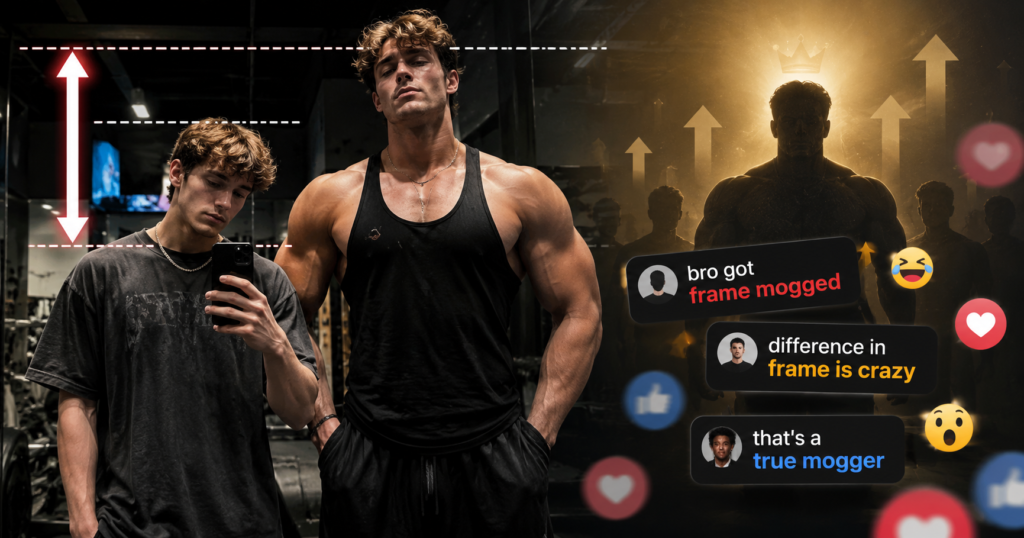
Mogging Meaning:
To “mog” someone means to outclass or outperform them, especially in physical appearance used in phrases like “he got mogged” or “frame mogging.” The term comes from AMOG (“Alpha Male of Group”), a phrase rooted in early-2000s manosphere internet culture, and has since spread into mainstream, mostly joking, everyday slang.
If you’ve seen “mogging” or “frame mogged” everywhere lately, you’re not imagining it the term had a genuine viral spike in 2026, driven by one specific gym photo. It’s also a word with a more serious backstory than most viral slang, tied to internet communities that mental health professionals have raised real concerns about. Here’s the full picture: the definition, the origin, what “frame mogging” specifically refers to, and why some experts think the term’s casual, joking use is worth a second look.
Table of Contents
What Does “Mogging” Mean?
Mog (verb): to look or perform far better than someone else in direct comparison, especially in physical appearance. Someone who mogs another person is sometimes called a “mogger”; the person being outclassed is a “moggee.” It’s most often used passively: “I got mogged,” “he was totally mogged,” “feeling mogged right now,” usually in response to a photo or video in which one person is seen as visibly superior to another in some way.
While mogging is most commonly used for physical comparisons height, muscle, facial structure it’s also used more loosely for other kinds of clear superiority, like winning a game or simply dominating a social moment. “He mogged everyone in that meeting” uses the same underlying idea (clearly outclassing others) without any physical-appearance component at all.
Where Does “Mogging” Come From?
This is the part most viral-slang explainers skip, and it’s genuinely important context. Merriam-Webster noted that “Mog” comes from AMOG, an abbreviation for “Alpha Male of Group,” a term describing the pseudoscientific idea of a “dominant male” archetype, popular in the manosphere, an internet subculture linked to misogynistic beliefs and, in its more extreme corners, to broader extremist ideology. AMOG emerged in online spaces by the early 2000s.
The shortened form “mog” started appearing by 2016, showing up on male-dominated internet forums including bodybuilding forums, which became an unlikely but significant hub for this specific meme history to describe taller, more muscular men being judged as visually “superior” when standing next to shorter, less-built men.
In the early 2020s, mogging became closely tied to looksmaxxing, a set of practices, sometimes fairly extreme, that some young men use to try to enhance their physical appearance. Communities built around looksmaxxing developed detailed, ritualized ways of comparing and ranking appearance, including highly specific compound terms for different features:
- Hairmogging when one person’s hair is judged fuller or better than another’s
- Jawmogging when one person’s jawline is perceived as more defined or chiseled
- Similar compound terms exist for other individual features, following the same “X-mogging” pattern
By the mid-2020s, as the term spread onto mainstream social media, it broadened significantly, moving from a specific, appearance-hierarchy ranking system used within looksmaxxing communities into a much more general, often humorous way to describe any kind of visible dominance or superiority, appearance-related or not.
The 2026 “Frame Mogging” Incident That Made the Term Explode
“Frame mogging,” one of your named secondary keywords, traces to a specific, well-documented viral moment in 2026. A livestreamer known online as Clavicular was approached at the gym by a large, physically imposing fraternity leader who wanted a photo together. When the photo was posted, viewers reacted by saying Clavicular had been “brutally frame-mogged” by the bigger man, meaning his physical frame looked visibly smaller and less impressive by direct comparison in the photo.
That single incident is widely credited with pushing “mogging” and “frame mogging” specifically from a term used mostly within niche appearance-focused online communities into mainstream, viral vocabulary almost overnight. “Frame mogging” now generally refers to being visibly outclassed specifically in body size, build, or physical presence when photographed or standing next to someone else a more specific subset of the broader “mogging” concept, focused on overall physical frame rather than a single feature like hair or jawline.
Why Experts Are Watching This Term Closely
This is the section most competing explainers either skip entirely or treat too lightly. Unlike most viral slang, mogging has drawn direct, on-record concern from mental health professionals not because the joking, mainstream use of the word is inherently harmful, but because of what it can represent underneath the humor.
Jonathan Alpert, a psychotherapist who works frequently with young men, has spoken publicly about this specific concern: that hyperfocus on physical comparison, when it tips from casual self-improvement into constant “maxing” or optimizing of one’s looks, becomes a genuine competitive and psychological problem. His concern isn’t with self-improvement itself, but with the shift toward treating appearance as something to be endlessly optimized and ranked against others.
Meme historians and internet-culture researchers have also pointed out that the term’s roots trace directly back through incel and manosphere forums, and that pandemic-era isolation likely contributed to how much value some young people placed on online figures and communities built around exactly this kind of appearance-based hierarchy and validation. The core observation from experts covering this shift: mogging’s journey “from serious to joke” doesn’t erase where it came from, and the underlying comparison culture it reflects is worth taking seriously even when the word itself is being used lightly.
This matters for how the term gets used today. Plenty of people using “mogging” casually online have no connection to or awareness of its manosphere and looksmaxxing origins, and are using it purely as an ironic, self-deprecating joke about a funny photo. That’s a real and common use case. But understanding where the term comes from adds useful context for anyone trying to make sense of why a seemingly silly viral word has attracted this much serious commentary.
How “Mogging” Is Used Today
Despite its more serious roots, most current usage the kind driving searches like “mogging meaning slang” is playful or ironic rather than genuinely hostile. A few common patterns:
Self-deprecating reactions to photos:
“I saw your new profile picture and immediately felt mogged,” a joking way to admiringly compliment someone else’s appearance at your own expense.
Non-appearance comparisons:
“He mogged everyone in Scrabble,” using the core “outclassed” meaning for skill or performance, with zero appearance component.
Compound, feature-specific versions:
“Hairmogged,” “jawmogged” carried over from looksmaxxing communities but often used more loosely and jokingly in mainstream contexts now.
“Frame mogging” specifically:
Almost always referencing body size/build comparisons, frequently tied back to the viral gym-photo incident that popularized the term.
Intransitive, general-dominance use:
“Whenever she walks into a room, she just mogs,” describing someone as generally standing out or dominating a space, without a specific person being directly compared.
Grammar and Usage Notes
“Mog” functions flexibly as a verb:
| Form | Example | Meaning |
| Transitive (mog + object) | “He mogged his friend in the photo.” | Directly outclassed a specific person |
| Intransitive (no object) | “She just mogs wherever she goes.” | Generally dominates or stands out |
| Passive (“get/feel mogged”) | “I got mogged by that photo.” | Being the one outclassed |
| Noun forms | “mogger” (the one who mogs), “moggee” (the one mogged) | Identifying either party in the comparison |
Passive constructions (“got mogged,” “feeling mogged”) are especially common, often used self-deprecatingly and admiringly at the same time, reacting to someone else’s photo or achievement rather than issuing a direct insult.
Mogging vs. Looksmaxxing: What’s the Difference?
These terms are closely related but not identical, and mixing them up is a common source of confusion:
| Term | What It Describes | Scope |
| Mogging | The act of visibly outclassing someone in a direct comparison | A specific moment, photo, or comparison |
| Looksmaxxing | An ongoing set of practices aimed at improving one’s own physical appearance | A broader, longer-term pursuit or mindset |
| Frame mogging | Specifically being outclassed in body size, build, or physical presence | A subset of mogging focused on physical frame |
| AMOG | The older, original manosphere term (“Alpha Male of Group”) that mogging is derived from | The historical root term, less commonly used directly today |
In short: looksmaxxing is the ongoing pursuit, mogging is what happens in a specific comparison moment, and AMOG is the older term the whole concept grew out of.
Common Misconceptions About Mogging
“Mogging is brand-new 2026 slang.”
The core term dates to at least 2016 on internet forums, and its root term (AMOG) goes back to the early 2000s; what’s new is the term’s mainstream visibility, not its existence.
“Mogging only refers to physical appearance.”
While that’s the most common use, it’s also used more generally for any clear, visible superiority in skill or performance, unrelated to looks.
“Everyone using this term is part of manosphere or looksmaxxing culture.”
Most current, casual usage is disconnected from that context entirely; many people using it as an ironic joke have no awareness of, or connection to, its origins.
“Frame mogging and mogging mean the same thing.”
Frame mogging specifically refers to body size/build comparisons, most closely tied to the viral 2026 gym-photo incident, while “mogging” broadly can apply to any feature or trait.
“Because experts have raised concerns, the term itself is dangerous to use.”
The concern raised by mental health professionals is about the underlying appearance-hyperfocus and “maxing” culture it can reflect in some communities, not a claim that every casual, joking use of the word is harmful.
The Broader Looksmaxxing Vocabulary Around Mogging
Mogging didn’t develop in isolation; it’s part of a larger, more structured vocabulary that grew out of looksmaxxing communities before spreading into mainstream slang. Understanding a few adjacent terms helps clarify why “mogging” carries more baggage than a typical viral word:
- Maxing shorthand for actively trying to improve or optimize a specific trait (as in “looksmaxxing”), the broader mindset that mogging culture grew out of
- Mewing a specific looksmaxxing practice involving tongue posture, claimed by proponents to influence jaw shape over time, though the claim lacks strong scientific support
- Canthal tilt, hunter eyes, and similar clinical-sounding terms highly specific facial-feature vocabulary used within looksmaxxing communities to rate and rank appearance in granular detail
- NPC a separate but related piece of internet slang sometimes used dismissively within similar online spaces, originally meaning “non-player character,” used to describe someone perceived as unremarkable or lacking individuality
None of this vocabulary is required to understand or use “mogging” casually — most people using the word today have no interaction with this deeper glossary at all. But it explains why journalists and researchers covering the term’s 2026 viral spike consistently traced it back through this specific community history rather than treating it as a standalone, isolated meme.
How “Mogging” Spread Across Platforms
The term’s spread followed a fairly typical path for niche internet vocabulary crossing into the mainstream, though its specific 2026 viral moment accelerated things considerably:
Livestreaming and Kick/Twitch culture:
The originating 2026 incident happened within livestreaming culture; a streamer’s in-person interaction became the specific spark that pushed “frame mogging” into wider visibility, illustrating how much viral slang increasingly originates from livestream moments rather than pre-recorded content.
TikTok and short-form video:
Once the term had a clear, meme-able reference point (the gym photo), it spread rapidly through reaction videos, duets, and commentary content, cementing “frame mogging” specifically as the more visible variant compared to the broader, older “mogging” term.
X/Twitter and Threads:
Text-based platforms picked up the term for quick, captioned reactions to photos and videos, often applying it well outside its original appearance-focused context: sports highlights, unexpected skill displays, or purely comedic non-appearance comparisons.
Traditional media coverage:
What’s somewhat unusual about this particular term’s trajectory is how quickly established outlets like NPR and The Guardian covered it not just as a slang explainer, but as a cultural-trend piece examining the term’s origins and implications, reflecting the genuine expert concern the word’s backstory raised.
Mogging Compared to Other Comparison-Based Slang
Mogging sits within a broader category of internet slang built around comparing people to each other, though each term carries a different tone and history:
| Term | What It Compares | Tone | Origin Context |
| Mogging | Physical appearance or general performance, direct comparison | Ranges from serious (in origin communities) to purely ironic (mainstream use) | Manosphere/AMOG, looksmaxxing |
| Rizz | Charisma, particularly in flirting | Complimentary or mocking | Broader Gen Z slang |
| Aura points | Retrospective self-grading of “coolness” | Self-deprecating, celebratory | 2024 TikTok trend |
| NPC | Perceived lack of individuality or awareness | Dismissive, often mocking | Gaming terminology repurposed as insult |
| Glow-up | Positive appearance transformation, usually self-referential | Celebratory | General internet culture |
What sets mogging apart from most of this list is the documented, specifically sourced origin tracing back through a subculture associated with misogynistic and extremist ideology — most comparison slang on this list doesn’t carry that same weight of backstory, which is exactly why outlets like NPR treated it as a genuine cultural story rather than a lighthearted trend piece.
Examples of How “Mogging” Shows Up in Everyday Conversation
To make the range of usage concrete, here’s how the term shows up across different, real-world-style contexts:
Reacting to a friend’s vacation photo:
“Ok, you’re mogging everyone on this beach” — purely complimentary, no negative connotation toward anyone else pictured.
Sports commentary:
“That rookie mogged the entire veteran lineup tonight” used for pure athletic performance, disconnected from appearance entirely.
Self-deprecating humor:
“Stood next to my little brother and got instantly mogged, he’s taller than me now” is a common, harmless family joke format.
Direct reference to the viral incident:
“That’s some serious frame mogging” used specifically when a photo resembles the original 2026 gym-photo comparison that popularized the phrase.
Non-human, object-based use (less common but documented): occasionally applied jokingly to objects or brands outperforming competitors, showing how far the term has stretched from its original meaning.
A Note on Using This Term Thoughtfully
Given its documented roots in appearance-based comparison culture, it’s worth using “mogging” with some awareness of what it can represent when taken too seriously persistent appearance comparison and ranking has been directly linked by mental health professionals to unhealthy competitive thinking about looks, particularly among young men. Using the word as a lighthearted joke about a funny photo is very different from treating appearance comparison as something to genuinely chase or “optimize.” If constant comparison to others’ appearance — online or in person starts affecting how you feel day-to-day, that’s worth talking through with someone you trust or a mental health professional, separate from how casually the word itself gets thrown around online.
Pros and Cons of the Mogging Trend
Pros
- Functions as a quick, widely understood way to describe a visible standout moment, positive or humorous
- Works for non-appearance contexts (skill, performance), giving it flexibility beyond its original meaning
- Often used self-deprecatingly and admiringly rather than as a genuine insult in casual use
Cons
- Rooted in appearance-hierarchy culture with documented ties to communities associated with misogynistic and extremist ideology
- Can normalize casual appearance-ranking language, even when used jokingly
- Mental health professionals have raised genuine concern about the broader “maxing”/optimization mindset connected to its looksmaxxing roots
- The line between lighthearted joke and genuine appearance-based insult isn’t always clear, especially to someone unfamiliar with the term’s more ironic mainstream usage
Why This Term Took Off With Younger Audiences Specifically
Researchers and journalists covering the term’s spike pointed to a specific generational factor: pandemic-era isolation. During extended periods of reduced in-person social contact, many young people, particularly young men, according to the professionals interviewed in NPR’s coverage, found community and belonging primarily online, sometimes within far-right spaces, sometimes far-left, sometimes somewhere in between. What these otherwise very different online communities shared was intense, structured language for evaluating and ranking people, including mogging-related vocabulary.
As those same young people returned to more regular in-person social life, some carried that comparison-heavy online vocabulary and mindset with them, which experts suggest may partly explain why a term with such specific, niche subcultural roots found genuine mainstream traction rather than staying confined to the communities where it originated. This isn’t a claim that everyone using “mogging” casually today shares that background; plenty of people simply picked up a funny word after seeing one viral photo, but it’s part of the fuller explanation for why the term resonated as broadly and quickly as it did once it broke into mainstream visibility.
Is Mogging “a Problem”? The Broader Debate
Coverage of the term’s 2026 spike hasn’t been limited to simple definition pieces — some outlets have directly asked whether the mainstreaming of mogging-related language represents a genuine cultural problem, or just another passing example of edgy internet humor going mainstream and losing its original bite along the way.
Arguments on the “it’s mostly harmless” side point to a few things: the vast majority of casual usage is self-deprecating or complimentary rather than genuinely hostile; most people using the word have no real connection to or awareness of its subcultural origins; and internet slang has a long history of migrating from niche, sometimes fringe communities into mainstream, defanged, ironic usage without carrying forward the original context’s problems.
Arguments on the “worth watching closely” side point to the specific, on-record concerns raised by mental health professionals about appearance-hyperfocus and competitive “maxing” mindsets; the term’s direct, traceable lineage through communities associated with misogynistic and extremist ideology; and a broader pattern where normalized casual language can gradually make more extreme underlying ideas feel more familiar or acceptable over time, even without anyone using the word intending that effect.
Neither side of this debate claims the word itself is dangerous in every single use; the disagreement is really about how much weight a term’s origin story should carry once its casual, everyday usage has drifted so far from where it started. That’s a genuinely open, ongoing cultural conversation rather than a settled question, which is part of why established outlets continued covering it as a real story rather than a quick slang explainer.
Key Takeaways
- “Mog” means to outclass or outperform someone, especially in appearance, most often used in passive form (“got mogged,” “feeling mogged”).
- The term comes from AMOG (“Alpha Male of Group”), an early-2000s manosphere term, with “mog” itself appearing on internet forums by 2016.
- “Frame mogging” specifically refers to being outclassed in body size or build, popularized by a specific viral 2026 gym-photo incident.
- Mental health professionals have raised genuine concern about the appearance-hyperfocus and “maxing” culture connected to the term’s looksmaxxing roots.
- Most casual, current usage is playful or self-deprecating rather than a serious insult, even though the term’s history is worth understanding.
FAQs
1. What does “mogging” mean in slang?
“Mogging” means to visibly outclass or outperform someone, most commonly used to describe physical appearance comparisons, as in “he got mogged” by someone taller or more muscular in a photo.
2. What does “frame mogging” mean specifically?
“Frame mogging” refers to being visibly outclassed in body size, build, or physical presence, a term that went viral in 2026 following a specific gym-photo incident involving a livestreamer and a larger man.
3. Where does the word “mog” come from?
It’s derived from AMOG (“Alpha Male of Group”), an early-2000s manosphere term, with the shortened “mog” appearing on internet forums by 2016, closely tied to looksmaxxing communities in the early 2020s.
4. Is “mogging” always meant as an insult?
Not usually; most current, mainstream use is playful, ironic, or self-deprecating, often used to admiringly react to someone else’s photo rather than as a genuine attack.
5. Why are mental health professionals concerned about the mogging trend?
Therapists have pointed to the term’s connection to looksmaxxing and appearance-hyperfocus, noting that when appearance comparison shifts from casual self-improvement into constant competitive “optimizing,” it can become a genuine psychological concern, particularly among young men.