
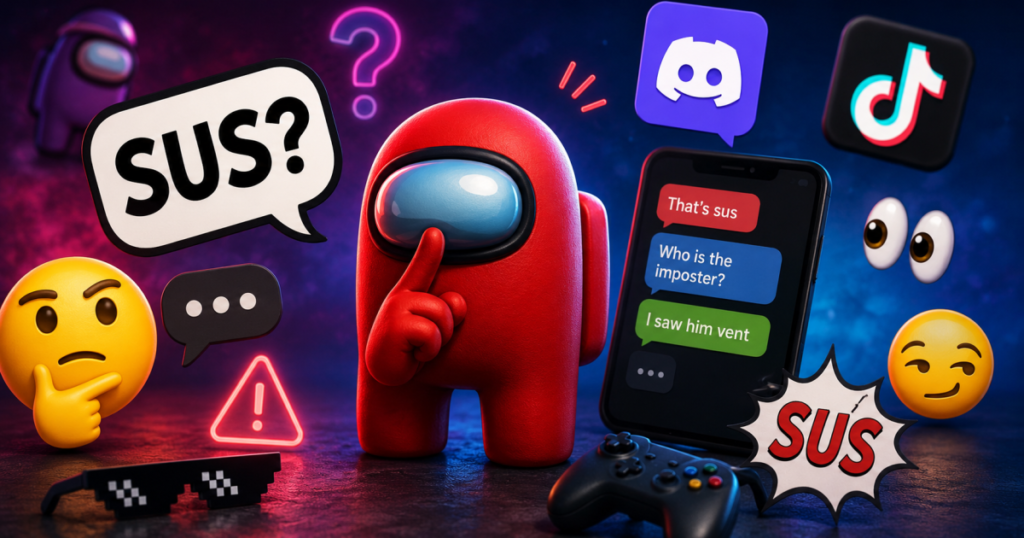
What does sus mean in slang? “Sus” is short for “suspicious” and is used to describe a person, action, or situation that seems suspicious, shady, or untrustworthy. Although the word existed in informal English before, it became a viral internet slang term after the popularity of Among Us, where players accuse others of being “sus.”
Have you ever seen someone comment “That’s sus” on TikTok, Discord, Instagram, or in a gaming chat and wondered what it means? If so, you’re not alone. The term sus has become one of the most popular internet slang words of the past few years, appearing everywhere from memes and gaming communities to anime discussions and everyday conversations.
But what does sus mean in slang, and why has it become such a huge part of online culture?
In this guide, we’ll explore the sus meaning, its origins, how the game Among Us made it famous, what the sus emoji represents, and how people use the term across social media platforms today.
What Does Sus Mean in Slang?
The slang word sus is short for suspicious or suspect. It is used when someone appears untrustworthy, questionable, strange, or likely to be hiding something.
Simple Definition
Sus Meaning:
Someone or something that seems suspicious, dishonest, or questionable.
Examples
- “Why is he acting so weird today? That’s sus.”
- “She suddenly deleted all her messages. Kinda sus.”
- “The explanation doesn’t make sense. Very sus.”
In online conversations, people often use sus as a quick way to express doubt or suspicion.
What Is Sus?
If you’re asking what is sus, the answer is simple: it’s an informal abbreviation of the word “suspicious.”
The term existed long before social media, but it became extremely popular through internet culture and gaming communities.
Today, people use it in:
- Text messages
- Gaming chats
- TikTok videos
- Discord servers
- Instagram comments
- Meme culture
- Anime communities
The word is now part of mainstream internet slang and is recognized by people worldwide.
Sus Meaning in Text Messages
In texting, sus meaning usually refers to behavior that seems unusual or questionable.
Examples in Texting
Friend 1: “He said he was sleeping but posted on Instagram.”
Friend 2: “That’s sus.”
Friend 1: “She suddenly stopped replying.”
Friend 2: “Kinda sus.”
The word is commonly used as a standalone response because it quickly communicates doubt or skepticism.
Where Did the Word Sus Come From?
Although many people associate the word with gaming, sus existed decades before Among Us.
The abbreviation has been used in English-speaking communities since at least the early 20th century.
Historically:
- “Sus” was shorthand for suspicious.
- Police and street communities often used it informally.
- British slang frequently included the term.
- Online communities later adopted it for casual conversation.
However, its modern popularity came from a very specific source.
How Among Us Made Sus Popular
The game Among Us transformed the word sus into a global internet phenomenon.
Released in 2018, the game became massively popular in 2020.
How the Game Works
Players try to identify hidden impostors within a group.
When someone behaves strangely, players accuse them of being suspicious.
Instead of typing the full word, many players simply wrote:
“Red is sus.”
or
“Blue acting sus.”
The phrase spread rapidly across gaming communities, social media platforms, YouTube videos, and memes.
Soon, millions of people who had never played the game were using the word.
What Does “When the Imposter Is Sus” Mean?
One of the internet’s most famous phrases is:
“When the imposter is sus.”
This phrase originated from Among Us memes.
It refers to situations where someone is obviously acting suspiciously or appears guilty.
The phrase became funny because it was often paired with:
- Distorted images
- Unexpected edits
- Absurd humor
- Random internet memes
Over time, “when the imposter is sus” became a joke used even outside the context of the game.
Example
Someone sneaks extra snacks into a movie theater.
Friend: “When the imposter is sus.”
The phrase humorously suggests that the person is behaving like an impostor.
Sus Among Us Meaning Explained
The connection between sus Among Us is now inseparable.
Whenever people hear the word “sus,” many instantly think of:
- Crewmates
- Impostors
- Emergency meetings
- Voting players out
Because of the game’s cultural impact, the word has become one of the most recognizable gaming slang terms ever created.
Even years after the game’s peak popularity, memes and jokes continue to reference this connection.
Sus Meme Meaning
The sus meme became one of the defining internet memes of the early 2020s.
Common Sus Meme Themes
- Someone acting suspiciously
- Obvious lies
- Strange behavior
- Random red-colored objects
- References to impostors
Many memes intentionally exaggerate situations to make them seem suspicious.
For example:
- A chair shaped vaguely like an Among Us character
- Random red objects
- Unusual facial expressions
Internet users jokingly label these as “sus.”
The humor often comes from finding Among Us references where none actually exist.
What Does the Sus Emoji Mean?
The sus emoji does not refer to one official emoji.
Instead, internet users often combine different emojis to express suspicion.
Common Sus Emojis
🤨 — Raised eyebrow
🧐 — Thinking face
😏 — Smirking face
👀 — Looking eyes
Example Usage
- “You sure about that? 🤨”
- “That story sounds sus 👀”
- “Hmm… 🧐”
These emojis help convey skepticism and doubt in conversations.
Many users simply call them “sus emojis” because they visually represent suspicion.
Sus Anime Meaning
In anime communities, sus anime usually refers to scenes, characters, or moments that seem questionable, suspicious, or awkward.
Examples include:
- A character hiding information
- Mysterious behavior
- Unexpected plot twists
- Uncomfortable interactions
Anime fans often comment:
- “That character is sus.”
- “This scene feels sus.”
- “His intentions seem sus.”
In many cases, the term is used humorously rather than seriously.
How People Use Sus on TikTok, Instagram, and Discord
The word has evolved far beyond gaming.
TikTok
Creators use “sus” when reacting to:
- Strange videos
- Unexpected situations
- Funny misunderstandings
Users comment “sus” on:
- Odd photos
- Questionable captions
- Funny posts
Discord
Gamers and online communities frequently use the term in:
- Voice chats
- Text channels
- Meme discussions
X (Formerly Twitter)
People often describe:
- Suspicious news
- Strange behavior
- Dubious claims
as “sus.”
Examples of Sus in Everyday Conversations
Here are some common examples:
Example 1
Person A: “I definitely didn’t eat your cookies.”
Person B: “That’s sus.”
Example 2
Person A: “I finished the entire project in five minutes.”
Person B: “Very sus.”
Example 3
Person A: “Trust me.”
Person B: “Now you’re sounding sus.”
Example 4
Person A: “I accidentally sent that text.”
Person B: “Sus.”
Is Sus a Bad Word?
No, sus is not considered a bad word.
It is generally:
- Informal
- Family-friendly
- Widely accepted online
However, context matters.
Calling someone “sus” may imply:
- They are lying
- They are hiding something
- Their behavior is questionable
Most people use the term jokingly rather than as a serious accusation.
Why Has Sus Become So Popular?
Several factors contributed to the popularity of the word:
Simplicity
It’s short and easy to type.
Meme Culture
Memes spread the term rapidly across the internet.
Gaming Communities
Among Us introduced the word to millions of players.
Social Media
TikTok, YouTube, Discord, Instagram, and X helped popularize it even further.
Today, sus is one of the most recognizable slang terms online.
The Evolution of Sus in Internet Culture
The word has gone through several stages:
- Traditional abbreviation for suspicious
- Common slang term
- Gaming vocabulary
- Among Us phenomenon
- Viral meme
- Mainstream internet language
This evolution demonstrates how quickly internet culture can transform everyday words into global trends.
Frequently Asked Questions
What does sus mean?
Sus means suspicious or suspect. It describes someone or something that seems questionable, dishonest, or unusual.
What is sus in texting?
In texting, sus is used when someone’s behavior seems strange, doubtful, or untrustworthy.
Is sus short for suspicious?
Yes. Sus is an abbreviation of the word suspicious.
Why do gamers say sus?
The term became popular among gamers because of Among Us, where players identify suspicious impostors.
What does “when the imposter is sus” mean?
It is a meme phrase referencing suspicious behavior in Among Us and is often used humorously online.
What is a sus meme?
A sus meme is a joke involving suspicious behavior, Among Us references, or exaggerated situations that seem questionable.
What does the sus emoji mean?
A sus emoji is usually an emoji such as 🤨, 🧐, 😏, or 👀 used to express suspicion or skepticism.
What does sus mean in anime?
In anime communities, sus refers to characters, actions, or scenes that appear suspicious, mysterious, or questionable.
Final Thoughts
If you’ve ever wondered what does sus mean in slang, the answer is surprisingly simple: it means suspicious. Yet the word’s journey from a casual abbreviation to a global internet phenomenon is what makes it fascinating.
Thanks to Among Us, meme culture, social media, and online gaming communities, sus meaning has expanded far beyond its original definition. Whether you’re discussing a sus meme, reacting with a sus emoji, joking about when the imposter is sus, or commenting on a sus anime scene, the term remains a core part of modern internet language.
As online culture continues to evolve, one thing is certain: whenever something seems questionable, strange, or a little suspicious, people will probably keep calling it sus.