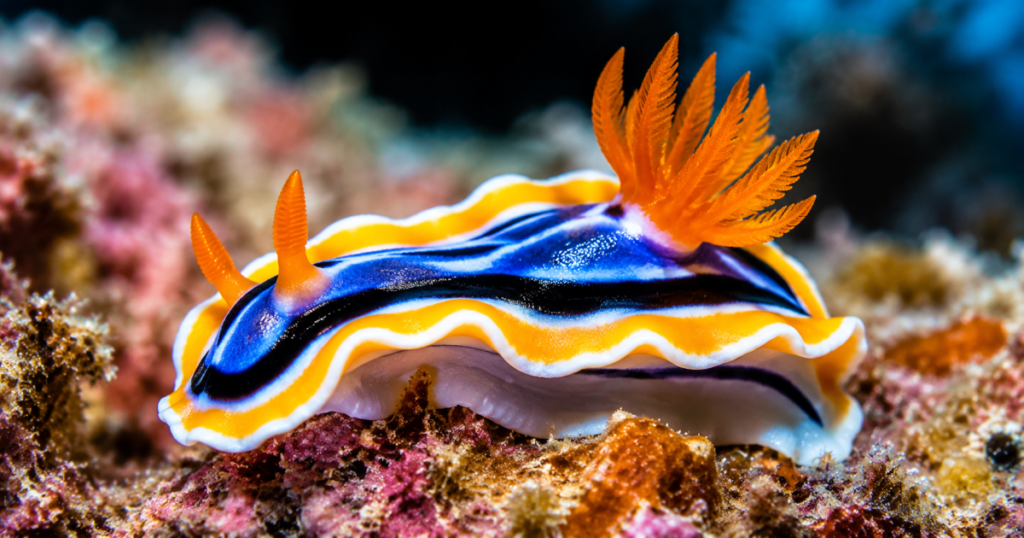
Quick Answer: A nudibranch is a soft-bodied sea slug that has no shell as an adult, known for its bright colors and exposed, feathery gills. The name comes from Latin and Greek words meaning “naked gills.” Nudibranchs live in oceans worldwide, eat specific prey like sponges and anemones, and some species are toxic to predators.
Key Takeaways
- Nudibranch means “naked gills,” from the Latin nudus (naked) and Greek branchia (gills).
- Nudibranchs are shell-less marine mollusks, closely related to snails, that lose their shell after their larval stage.
- Scientists have identified roughly 3,000 to 4,700 known species, and new ones are still being discovered.
- Some nudibranchs are genuinely toxic or distasteful to predators, since they can absorb and reuse the poisons or stinging cells of the prey they eat.
- Most nudibranchs eat one specific type of prey, such as a single sponge or anemone species, which is a major reason they’re extremely difficult to keep as pets.
- They’re found in every ocean on Earth, from tide pools to deep water, but are most colorful and abundant in shallow tropical seas.
What Is a Nudibranch?
A nudibranch is a type of sea slug, a soft-bodied marine mollusk that starts life with a tiny shell but sheds it permanently after its larval stage. Once that happens, the animal spends the rest of its life without any shell at all, relying on other defences to survive.
Nudibranchs belong to the scientific order Nudibranchia, which sits within the larger group of mollusks that also includes snails, clams, and octopuses. They’re often called the “butterflies of the sea” because of their vivid colors and patterns, which can include stripes, spots, and frilly, plant-like appendages.
What Does “Nudibranch” Mean?
The word nudibranch comes directly from its two root words: Latin nudus, meaning “naked,” and Greek branchia, meaning “gills.” Put together, it literally translates to “naked gills.” This name refers to the feathery gill structures that many species display openly on their backs, without any shell to cover or protect them, unlike most other mollusks. In dorid nudibranchs, this shows up as a ring of exposed gills near the tail end of the body.
How to Pronounce “Nudibranch”
Nudibranch is pronounced NEW-dih-brank (or NOO-dih-brank), with the stress on the first syllable. The ending rhymes with “tank,” not “ranch.”
What Do Nudibranchs Look Like?
Nudibranchs vary enormously in appearance across the roughly 3,000-plus known species, but a few features show up again and again.
- Bright, often clashing colors: reds, purples, yellows, and electric blues are common, sometimes on the same animal.
- Rhinophores: two antenna-like sensory organs on the head, used to detect chemical signals in the water.
- Cerata or gill plumes: finger-like or feathery structures on the back that handle breathing and, in many species, digestion and defense.
- Size range: most species are just a few millimeters long, though some, like the Spanish dancer (Hexabranchus sanguineus), can reach nearly a foot in length.
The Two Main Body Types
Nudibranchs are generally split into two major groups based on body structure, which is one of the easiest ways to tell species apart at a glance.
| Type | Gill Location | Example |
| Dorid | Ring of gills around the back/rear of the body | Chromodoris, Jorunna |
| Aeolid | Finger-like cerata covering the back and sides | Berghia, Flabellina |
Where Do Nudibranchs Live?
Nudibranchs live in oceans around the world, from cold tide pools in the Pacific Northwest to coral reefs in the tropics. They’re most diverse and colorful in shallow, warm tropical waters, though hardy species also thrive in cold northern seas, and some have even been documented in deep water far below where sunlight reaches.
They’re exclusively marine animals. Despite superficial resemblance to garden slugs, nudibranchs cannot survive in freshwater or on land.
What Do Nudibranchs Eat?
This is one of the most important things to understand about nudibranchs, because their diet explains almost everything else about how they live, defend themselves, and why they’re so hard to keep in captivity.
Most nudibranch species are extreme specialist feeders, meaning they eat only one or two specific types of prey and nothing else, even when other suitable-looking food is available. Common prey includes:
- Sponges
- Sea anemones
- Hydroids
- Bryozoans (colonial invertebrates sometimes called “moss animals”)
- Soft corals
- Tunicates
- Other, smaller nudibranchs (in some predatory species)
- Algae (only in a related group of sea slugs, the sacoglossans, not true nudibranchs)
Why Nudibranchs Won’t Switch Diets
Unlike many aquarium animals, which will adapt to eat frozen or pellet food, nudibranchs are true dietary specialists. Marine biologists and aquarium hobbyists widely report that a nudibranch will starve to death rather than eat an unfamiliar food source, even a close relative of its natural prey. This extreme pickiness is a major reason wild-caught nudibranchs sold in the pet trade so often die within weeks or months.
Are Nudibranchs Poisonous?
Yes, many nudibranch species are toxic or distasteful to predators, though the danger level depends heavily on the species and how the toxin is used.
Nudibranchs get their defenses in one of two main ways:
- Sequestering stinging cells: Species that eat sea anemones, jellyfish, or hydroids can absorb the prey’s stinging cells, called nematocysts, without triggering them. The nudibranch stores these cells in its own tissue, usually in its cerata, and can fire them at predators later, essentially borrowing someone else’s weapon.
- Producing or storing toxic chemicals: Other species absorb toxic compounds from the sponges or corals they eat, or manufacture their own distasteful chemicals, making themselves unpleasant or dangerous to bite.
Their bright warning colors typically advertise this toxicity to predators, a strategy biologists call aposematism, the same reason poison dart frogs and monarch butterflies are so vividly colored.
Are Nudibranchs Dangerous to Humans?
Nudibranchs pose little serious danger to people, but caution is still worth taking. Handling one with bare hands isn’t recommended, since some species can cause skin irritation or a mild sting, particularly those that store stinging cells from anemones or jellyfish. This risk can persist even in a dead specimen, since the stored stinging cells may remain active. If you want to handle or move one, use gloves or a soft container rather than bare hands.
Nudibranch vs. Other Sea Slugs: What’s the Difference?
“Sea slug” is a broader, informal term that includes nudibranchs along with several other, less closely related groups of shell-less mollusks. All nudibranchs are sea slugs, but not all sea slugs are nudibranchs.
| Group | Shell Status | Diet | Example |
| Nudibranch | No shell as adult | Sponges, anemones, hydroids (specialist) | Chromodoris, Spanish dancer |
| Sea hare (Anaspidea) | Small internal shell | Algae and seaweed | Aplysia |
| Sacoglossan (sap-sucking slug) | Varies by species | Algae (some are photosynthetic) | Elysia |
| Sea butterfly (pteropod) | Some retain a thin shell | Plankton | Clione |
Can You Have a Nudibranch as a Pet?
Technically yes in many places, but it’s strongly discouraged by marine biologists and experienced reef aquarium hobbyists alike, and here’s the practical reason why: nearly every nudibranch species is an extreme dietary specialist, and replicating its exact food source in a home aquarium is either extremely difficult or outright impossible.
Why Nudibranchs Make Poor Pets
- Impossible diets to replicate. Most species eat only one specific sponge, coral, or anemone species, which most aquarists cannot identify, source, or sustainably grow.
- Short natural lifespans. Even in ideal conditions, most nudibranchs live only about 9 to 12 months.
- Sensitivity to water conditions. They’re highly sensitive to shifts in salinity, temperature, and water quality.
- Vulnerability in tanks. Their soft bodies are easily injured by pumps, filter intakes, and other tank equipment.
- Ethical and conservation concerns. Because captive breeding is nearly impossible for most species, nudibranchs sold in the aquarium trade are typically wild-caught, and buying one that will likely starve encourages further removal from wild populations.
The One Exception: Berghia Nudibranchs
There’s a notable exception worth knowing about. Berghia nudibranchs are sometimes intentionally added to reef aquariums, not as a display pet, but as a natural pest-control method, since they feed almost exclusively on Aiptasia, a common nuisance anemone that plagues saltwater tanks. Once the Aiptasia supply runs out, though, Berghia will starve unless relocated to a tank with more, so even this “successful” pairing has a built-in expiration date.
Pros and Cons of Keeping Nudibranchs
| Pros | Cons |
| Strikingly beautiful, unique addition to a tank | Extremely specialized, often impossible diets |
| Berghia can help control Aiptasia pest anemones | Short lifespans even under good care |
| Fascinating to observe and photograph | High risk of slow starvation |
| No shell means unobstructed viewing of the animal | Wild-caught sourcing raises conservation concerns |
Bottom line: For nearly all species, admiring nudibranchs in the wild, at a public aquarium, or through underwater photography is a far better option than trying to keep one at home.
Common Misconceptions About Nudibranchs
- “Nudibranchs eat algae.” Most true nudibranchs do not eat algae at all; that behavior belongs to a different group of sea slugs called sacoglossans. Pet shops sometimes mislabel nudibranchs as algae eaters, which leads to accidental starvation.
- “All nudibranchs are dangerous to touch.” Toxicity varies widely by species. Many are harmless to touch, though it’s still best practice to avoid handling any of them with bare hands.
- “Nudibranchs are a type of fish.” They’re mollusks, more closely related to snails, clams, and octopuses than to any fish.
- “A colorful nudibranch is easy to keep because it’s popular in pet stores. Being sold commercially doesn’t mean a species is sustainable to keep; most nudibranchs in the aquarium trade are not.
- “Nudibranch and sea slug mean exactly the same thing.” Nudibranchs are one specific group within the larger, informal category of animals called sea slugs.
Frequently Asked Questions
What is a nudibranch?
A nudibranch is a shell-less sea slug in the order Nudibranchia, known for its bright colors and exposed gills. The name means “naked gills” in Latin and Greek.
Are nudibranchs poisonous?
Many species are toxic or distasteful to predators. They get their defenses either by storing stinging cells absorbed from prey like anemones and jellyfish, or by accumulating toxic chemicals from sponges and corals they eat. Some pose a mild risk of skin irritation to humans if handled with bare hands.
What do nudibranchs eat?
Most nudibranchs are extreme dietary specialists that eat only one or two specific types of prey, such as a particular sponge, anemone, hydroid, or coral species. A small number of predatory species eat other, smaller nudibranchs.
Can you have a nudibranch as a pet?
It’s legally possible in many places but generally not recommended. Nearly all species have extremely specific diets that are nearly impossible to replicate at home, leading most captive nudibranchs to slowly starve within weeks or months.
How many species of nudibranch are there?
Estimates vary by source, but roughly 3,000 to 4,700 species have been formally described, and researchers continue to discover and classify new ones every year, particularly in deep or remote ocean habitats.